

📰 Source: upgoat.net | Upgoat
✍️ Original author: oppressed
⬆️ score: 10
v/WhiteHistory · by u/oppressed
📝 Original content:
https://files.catbox.moe/543qj1.png
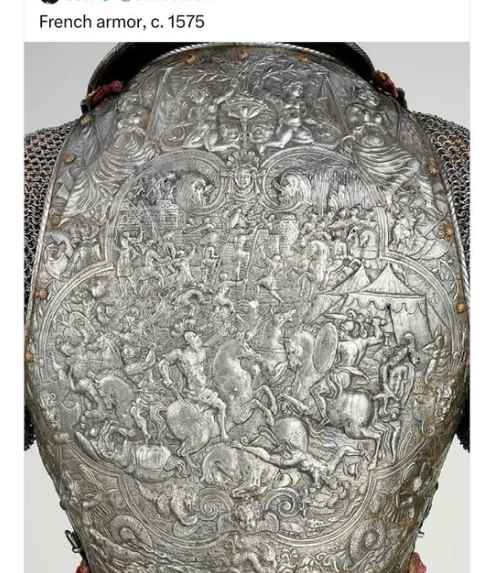
In the late 1500s, French armor was still made from steel plate, but it was changing because guns were becoming more common. Full knightly suits were less useful on the battlefield, so soldiers often wore partial armor: a helmet, breastplate, backplate, arm protection, and thigh guards. Cavalry armor often used a peascod breastplate, which had a pointed, bulging front shaped like fashionable men’s clothing of the time. Some armor was made for real fighting, while richer nobles also owned decorative armor for parades, ceremonies, and showing power.
French royal armor could be extremely fancy. Earlier in the century, Henry II of France owned parade armor decorated with silver, gold, leather, red velvet, mythological figures, and dense scrolling designs; the Metropolitan Museum says it was one of the most elaborate French parade armors and was not just plain battle gear. The Musée de l’Armée says Henry II’s military armor was about 1.79 meters tall and weighed 19.7 kg, showing that some French armor was practical enough for use. By the late 1500s, French armor showed both sides of Renaissance warfare: protection for pistols, swords, and lances, but also decoration meant to prove wealth, rank, and royal authority.
This post was automatically imported by OratioRepostBot.